
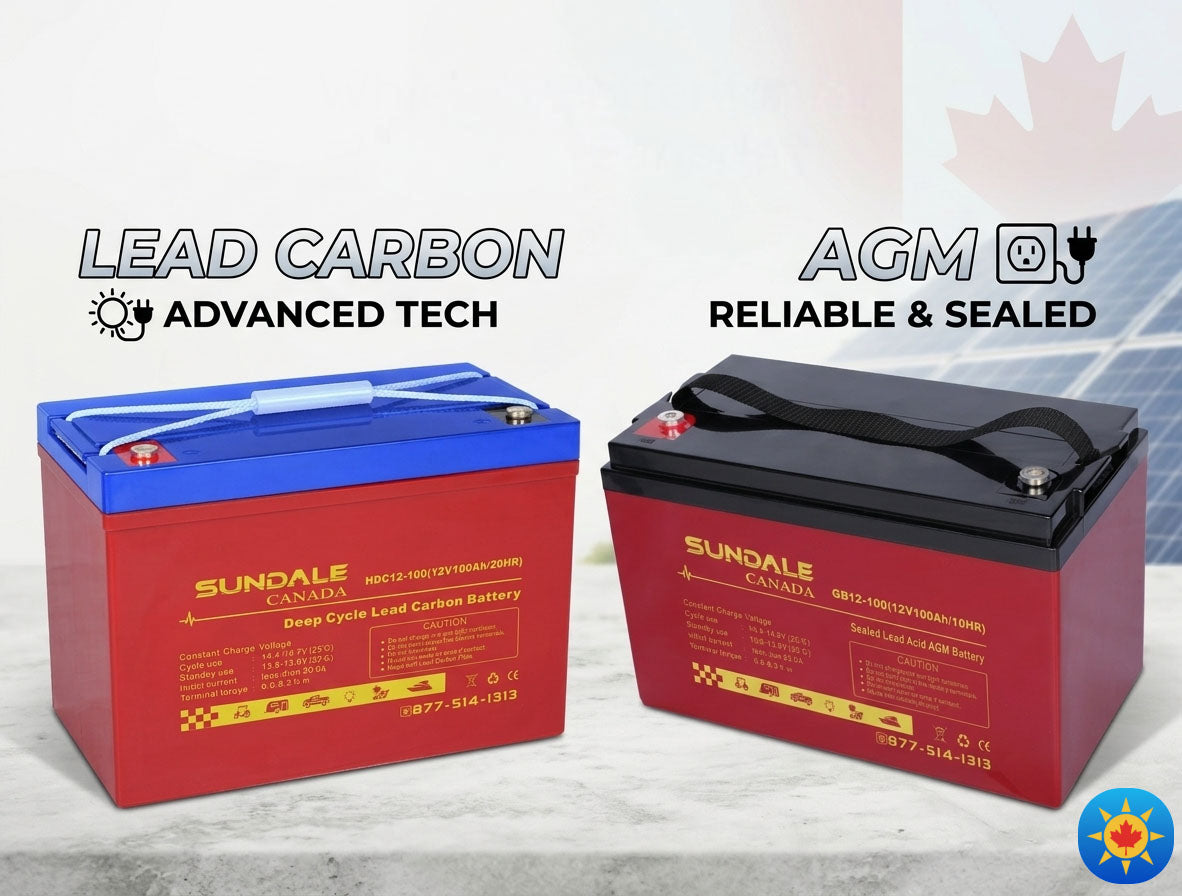

Lead Carbon vs AGM Batteries
If you’re choosing between lead carbon and AGM batteries, the right answer depends on how you plan to use your system.
-
For solar and off-grid systems → lead carbon is usually the better long-term investment
-
For backup or budget setups → AGM can still make sense
This guide breaks down the real differences so you can choose the right battery for your setup—especially in Canadian conditions.
🔋 Quick Comparison: Lead Carbon vs AGM
| Feature | Lead Carbon Battery | AGM Battery |
|---|---|---|
| Lifespan (cycles) | 2000–3000+ | 300–800 |
| Upfront Cost | Higher | Lower |
| Cost Over Time | Lower | Higher |
| Cold Weather Performance | Better | Moderate |
| Depth of Discharge | Deeper (more usable power) | Limited |
| Best For | Solar, off-grid, frequent cycling | Backup, occasional use |
⚡ What’s the Difference?
Lead Carbon Batteries
Lead carbon batteries are an advanced version of lead-acid batteries that use carbon additives to improve performance.
They are designed for:
-
Frequent charging/discharging (solar use)
-
Longer lifespan
-
Better efficiency under real-world conditions
👉 Ideal for: off-grid systems, cabins, and daily-use solar setups
AGM Batteries (Absorbent Glass Mat)
AGM batteries are sealed lead-acid batteries designed for reliability and low maintenance.
They are:
-
Affordable upfront
-
Simple to use
-
Widely available
👉 Ideal for: backup power, RVs, and light-use systems
❄️ Performance in Canadian Winters
This is where the difference really matters.
-
Lead carbon batteries handle cold temperatures better and recover faster after deep discharge
-
AGM batteries lose capacity more quickly in freezing conditions
If you're running a system in Alberta or other cold regions, this becomes a major factor in long-term performance.
💰 Cost: Upfront vs Long-Term Value
AGM batteries look cheaper at first—but that’s not the full story.
-
AGM batteries wear out faster and need replacing sooner
-
Lead carbon batteries last significantly longer
👉 Over time, lead carbon is often the better investment, especially for solar systems that cycle daily.
🏡 Best Battery for Your Use Case
Choose Lead Carbon if you:
-
Run an off-grid solar system
-
Power a cabin or rural property
-
Need long lifespan and reliability
-
Want better performance in cold weather
👉 Recommended: browse our lead carbon battery options
Choose AGM if you:
-
Need backup power only
-
Are working with a tight budget
-
Use your system occasionally
-
Want a simple plug-and-play option
👉 Recommended: browse our AGM battery selection
🔧 What Size Battery Do You Need?
This depends on:
-
Your daily power usage
-
Whether you're off-grid or grid-tied
-
How many days of backup you want
As a general rule:
-
Small cabin → 1–2 batteries
-
Medium system → 2–6 batteries
-
Full off-grid home → larger battery bank
👉 Not sure? Contact us and we’ll help size your system.
❓ FAQ
Are lead carbon batteries better than AGM?
For solar and frequent use—yes. For occasional backup—AGM can still be a good option.
Do these batteries work in winter?
Yes, but lead carbon performs better in cold climates and maintains capacity more effectively.
Which battery lasts longer?
Lead carbon batteries typically last several times longer than AGM under solar use.
🧠 Final Verdict
-
If you're building a serious solar system → go with lead carbon
-
If you just need cheap backup power → AGM is fine
The right choice comes down to how often you use your system—and how long you want it to last.
👉 Need Help Choosing?
If you're not sure which battery is right for your setup, reach out. We can recommend the best option based on your system, budget, and location.
Or browse our full selection:
-
Lead Carbon Batteries
-
AGM Batteries